West Linn Water Damage RestorationWater extraction and structural drying
Contaminated water response

Sewage Backup Cleanup in West Linn, OR

Sewage backup cleanup in West Linn begins with Category 3 controls. The cleanup crew isolates affected rooms, removes contaminated porous materials and cleans remaining surfaces before structural drying, with 24/7 assessment.

(888) 373-8814Call about sewage indoors
  • Category 3 containment
  • Controlled material removal
  • 24/7 contamination assessment
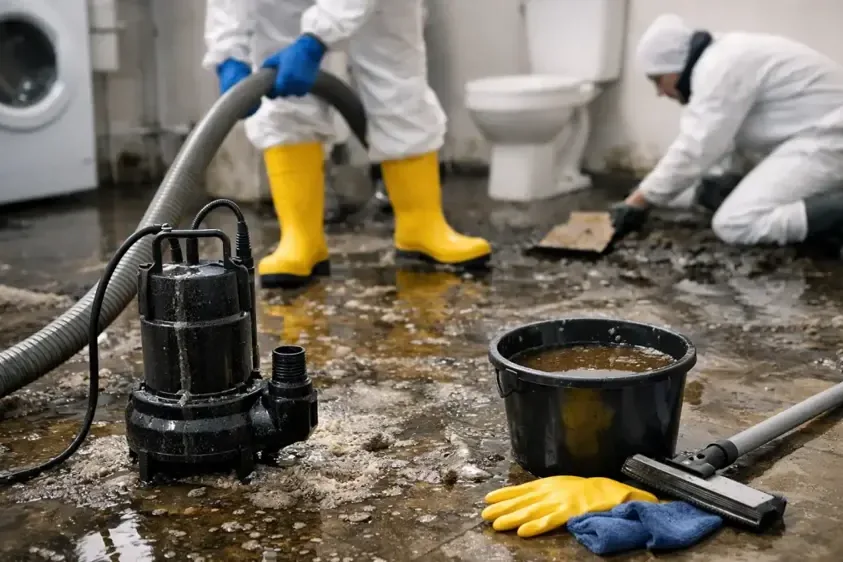
Protective-clothed workers cleaning contaminated water around bathroom fixtures
Water categoryCategory 3 immediately
First controlRestrict access
Porous materialsRemove when affected
Surface treatmentLabel dwell time
First steps

What to do before sewage backup cleanup

  1. Keep people away. The household closes access to affected rooms and prevents pets from entering. Nobody should cross sewage to retrieve belongings or operate electrical equipment.
  2. Stop fixture use. Occupants avoid flushing toilets or running connected fixtures while the source is investigated. Additional discharge can enlarge the contaminated area and complicate containment.
  3. Avoid fans and household cleanup. Residents leave contaminated carpets and debris in place for assessment. Uncontrolled airflow and movement can carry contamination beyond the original wet boundary.
  4. Report the affected route. The caller identifies overflowing fixtures, rooms and access limitations. The 24/7 response assessment considers source control, protective equipment and a clean removal path.

Sewage Backup Cleanup assessment

Establish the boundary
The cleanup technician maps sewage contact and restricts access, setting containment and a protected route before recovery tools or debris move through the property.
Remove water and porous waste
The crew recovers sewage with appropriate equipment and removes affected porous materials above the wet boundary, documenting what cannot remain in the building.
Clean and treat surfaces
Personnel physically clean retained surfaces, then apply an appropriate EPA-registered antimicrobial at its labeled dwell time while maintaining the work-area controls.
Dry retained structure
The drying team measures framing and other retained materials, adjusts dehumidification and airflow, and records both drying progress and the completed cleaning steps.
How the work proceeds

How sewage backup cleanup is handled

  1. 1

    Establish the boundary

    The cleanup technician maps sewage contact and restricts access, setting containment and a protected route before recovery tools or debris move through the property.

  2. 2

    Remove water and porous waste

    The crew recovers sewage with appropriate equipment and removes affected porous materials above the wet boundary, documenting what cannot remain in the building.

  3. 3

    Clean and treat surfaces

    Personnel physically clean retained surfaces, then apply an appropriate EPA-registered antimicrobial at its labeled dwell time while maintaining the work-area controls.

  4. 4

    Dry retained structure

    The drying team measures framing and other retained materials, adjusts dehumidification and airflow, and records both drying progress and the completed cleaning steps.

Planning the work

What does sewage backup cleanup cost in West Linn, OR?

Sewage backup cleanup often ranges from $1,500 to $8,000 or more. Contaminated area, porous-material removal, containment and disposal drive the scope; drain repair and reconstruction can be separate charges.

Contained fixture area

$1,500 to $3,000
  • Restricted small room
  • Hard-surface cleaning
  • Limited debris handling

Several contaminated materials

$3,000 to $5,500
  • Pad and drywall removal
  • Protected disposal route
  • Structural moisture checks

Extensive affected space

$5,500 to $8,000+
  • Larger containment area
  • More demolition and disposal
  • Longer retained-material drying

The scope reflects water category, affected area, material class and the delay before drying. Compare restoration cost factors.

A sewer backup creates a contamination problem even when the liquid looks diluted. The cleanup crew treats sewage as Category 3 from the outset. Opening windows and aiming household fans across the room does not make the space sanitary. The initial assessment identifies the affected boundary and a route that keeps removal work away from clean rooms.

Containment before sewage removal

For a backup in Bolton, the response team asks which fixtures overflowed and whether water continues to rise. Those observations help the appropriate plumbing or utility personnel investigate the source. The property owner and utility can clarify responsibility for the affected connection. The cleanup scope separately describes the building materials touched by contaminated water.

  • Occupants and pets remain outside the affected area and avoid tracking contamination across thresholds.
  • Trained cleanup personnel select protective gloves, boots, eye protection and other necessary PPE.
  • Containment and controlled access separate removal work from unaffected rooms and contents.
  • Contaminated debris follows a protected handling route to reduce contact with clean surfaces.

Why porous materials need a different decision

Sewage cleanup in Hidden Springs and Marylhurst includes the rooms and cavities reached by the backup. At any property, the assessor follows contamination into carpet pad, insulation and drywall. Porous materials affected by sewage generally require removal rather than a fan-assisted attempt to save them. Cuts extend above the affected waterline as the assessment requires, including moisture that wicked upward.

The team cleans exposed hard surfaces before applying an EPA-registered antimicrobial appropriate to the surface and loss. Product instructions govern dilution, contact time and use conditions. A quick spray over debris cannot replace physical cleaning or satisfy a product's required dwell time.

Drying follows cleaning

The drying team measures remaining framing and other retained structural materials after removal and cleaning. Airflow and dehumidification then address retained moisture within the controlled work area. Completion records distinguish sanitation steps from moisture measurements so the owner can see both parts of the work.

The water extraction service explains liquid recovery, but sewage adds controls beyond ordinary extraction. Structural drying describes the retained-material stage. The contractor records removed materials, cleaning products, photographs and equipment operation without making an insurance coverage promise.
Service area

Sewage backup cleanup coverage

Water damage restoration covers ZIP 97068, including Bolton, Sunset, Cedaroak, Marylhurst, Hidden Springs and Tanner Basin. The response team checks access and affected building levels before setting up extraction and drying equipment. Nearby town coverage appears on the service-area page.

Neighborhood and town coverage
Next steps

Related restoration services

Questions

Sewage Backup Cleanup questions

01Is sewage always Category 3?

A sewage backup starts as Category 3 because it can contain harmful contaminants. A clear appearance or dilution with other water does not remove the need for protective handling and material assessment.

02Can household bleach make wet carpet safe?

A surface chemical treatment does not clean the full depth of carpet and pad. Sewage-affected porous materials generally require removal. The cleanup crew evaluates retained surfaces and follows the selected product label.

03Does cleanup fix the blocked drain?

Source diagnosis and plumbing repair are distinct from contaminated building cleanup. The property owner should confirm how the blockage investigation, sewage removal and drying scopes coordinate before authorizing work.

04Why cut drywall above the visible mark?

Moisture and contamination can move beyond the visible pool through porous material. The assessor checks that boundary and documents a removal height that addresses affected drywall and concealed insulation.

05What should happen before 24/7 help arrives?

Occupants keep the area closed, stop adding water through affected fixtures and avoid direct contact. Public utility or emergency instructions take priority when a wider overflow or unsafe condition is involved.

06Which records explain the cleanup?

Photographs, affected-material lists, removal notes, product information and moisture logs describe the work. An itemized scope separates contamination controls from plumbing or reconstruction. The insurer reviews coverage under the actual policy.

24/7 water restoration

Sewage on a floor needs controlled cleanup

The 24/7 assessment identifies the contaminated boundary and coordinates safe removal, cleaning and retained-material drying.

(888) 373-8814Wet rooms? Call