Lake Oswego Water Damage Restoration
A wet floor can conceal a much larger problem underneath. Lake Oswego water damage restoration starts by finding the entry path, removing accessible water and checking the materials that remain wet behind finished surfaces.
(888) 373-8814Discuss the wet areas- Water source assessment
- Material moisture checks
- Documented drying progress
A stopped leak still leaves water inside floors and walls. Cleanup decisions should follow the actual spread through the building.
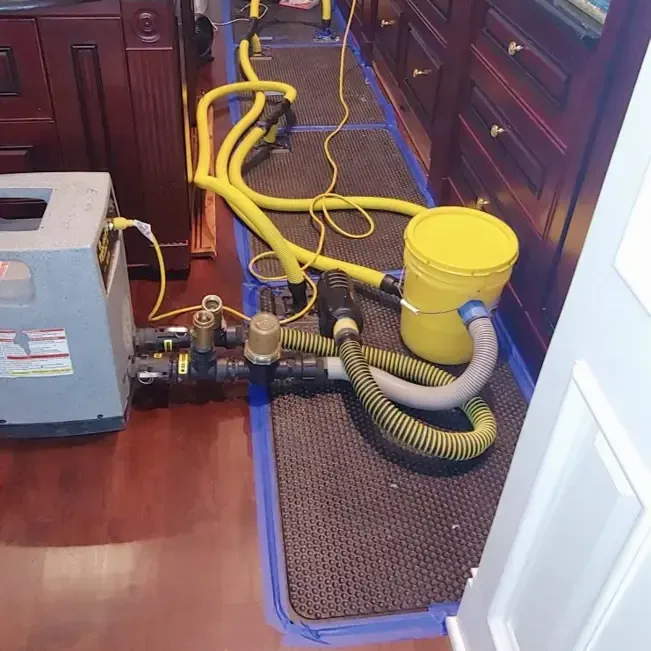
Protect people and preserve useful damage details
- Keep access safe. People and pets should stay outside rooms with contaminated water, sagging ceilings or electrical equipment exposed to moisture until those hazards are assessed.
- Stop a safe supply. An accessible shutoff may limit a plumbing release, but reaching it should never require crossing water or touching wet electrical controls.
- Record visible changes. Photos taken from dry ground can show the water path, damaged furniture and wet room edges before anything is moved or removed.
- Separate dry belongings. Small dry items can be moved away from an advancing wet area when the route is safe and the items are uncontaminated.
- Describe the source. A caller should explain whether water came from plumbing, rainfall or a drain, and whether the flow has already been stopped.
Choose the cleanup that fits the damage
A broken supply pipe, an overflowing drain and rain entering a ceiling need different starting points. These services address the affected materials and the source.
 Water ExtractionPooled water is recovered before a technician checks carpet backing, floor joints and the room boundaries for hidden spread.
 Flood Damage CleanupOutdoor water carrying dirt needs controlled removal, material sorting and cleaning before the remaining structure can begin drying.
 Storm Water DamageRain entering at a doorway or wall calls for an entry assessment alongside cleanup of the wet interior.
 Slab Leak Water DamageMoisture appearing through floor finishes needs a plumbing diagnosis and a separate plan for drying the affected building layers.
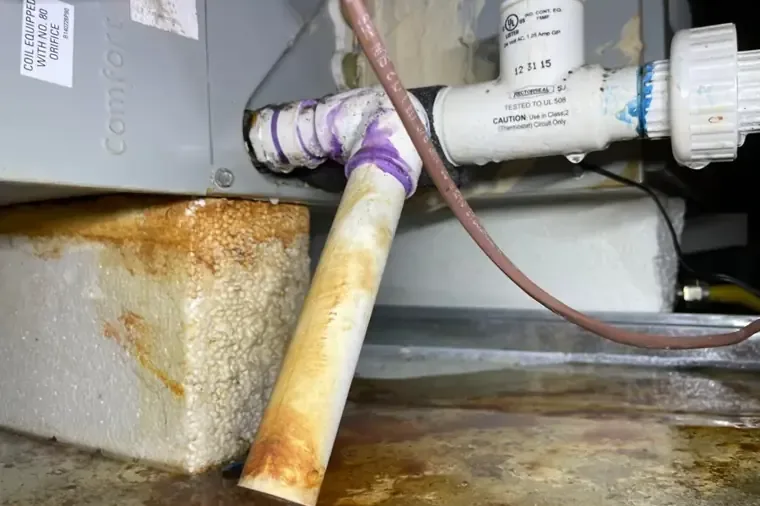 AC Condensate Leak CleanupA condensate overflow can soak nearby framing quietly; cleanup follows the drain path and the materials beneath the equipment.
 Water Heater Leak CleanupTank leakage may run beneath storage and wall plates, leaving more to address than the visible utility floor puddle.
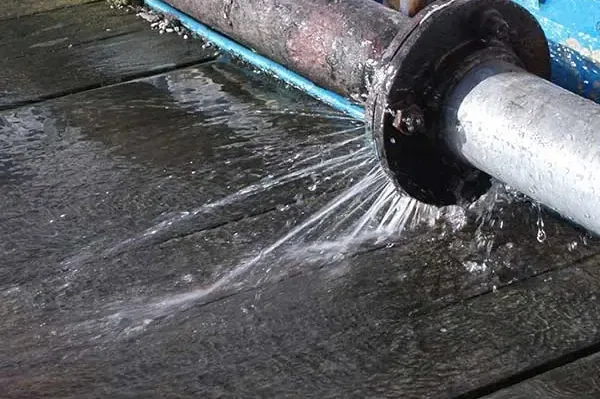 Burst Pipe CleanupOnce the water supply is isolated, extraction and moisture mapping show how far a pressurized release has traveled indoors.
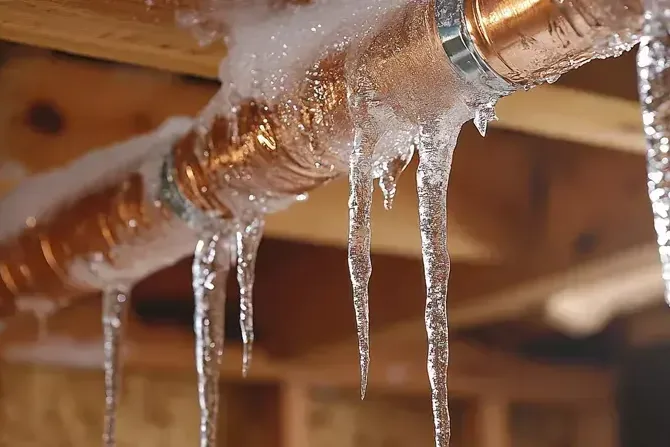 Frozen Pipe Water DamageA thaw can reveal a split pipe; damaged insulation, wall cavities and flooring need attention after the plumbing repair.
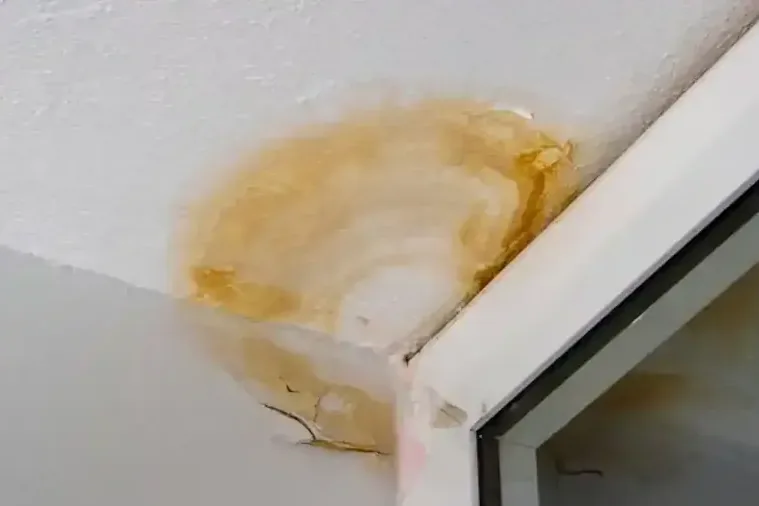 Ceiling Leak Water DamageSagging ceiling panels require restricted access while the water source and the condition of the overhead assembly are assessed.
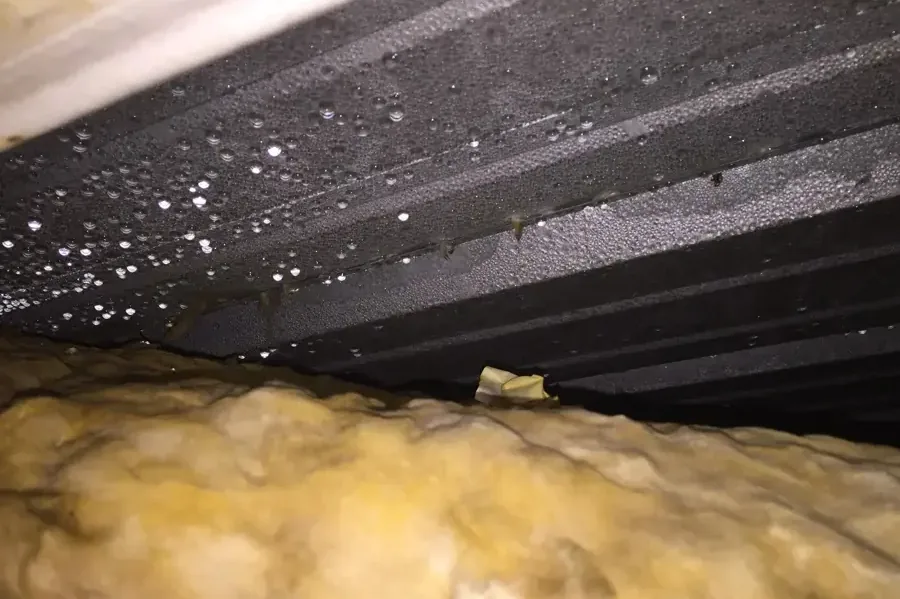 Roof Leak Water DamageInterior rain damage needs coordination with roof repair, plus inspection of insulation and the ceiling below the entry path.
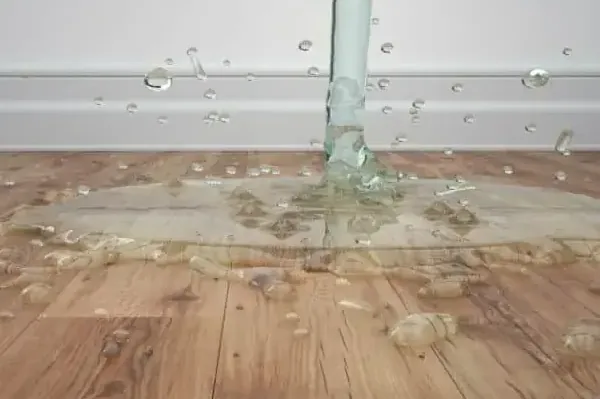 Appliance Leak Water DamageWater below a dishwasher or washer can hide beneath cabinets and floor coverings even after the appliance stops leaking.
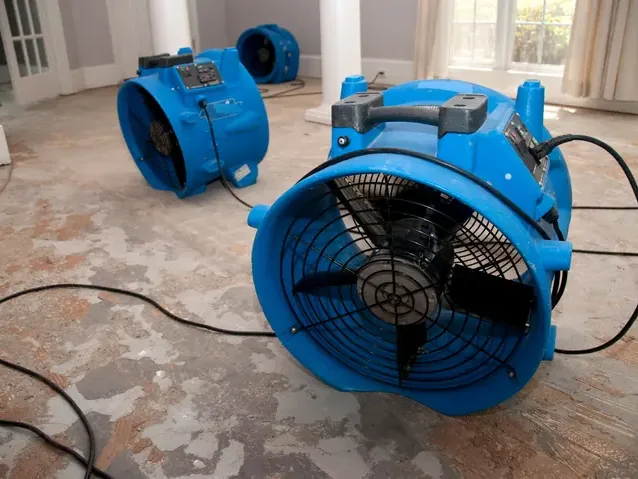 Structural DryingTargeted airflow and moisture removal work together, with readings used to decide when retained building materials have dried sufficiently.
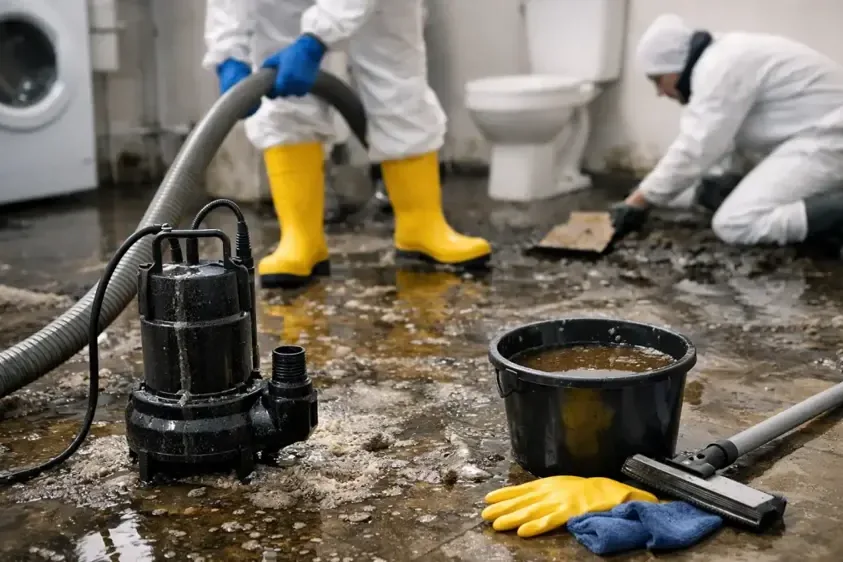 Sewage Backup CleanupContaminated drain water needs separation from occupied rooms, careful removal of affected porous materials and cleaning of salvageable surfaces.
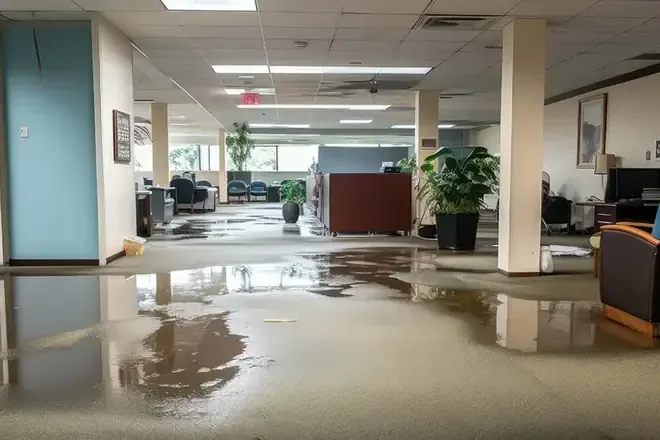 Commercial Water DamageBusiness cleanup accounts for wet inventory, access routes and shared rooms while documenting the damaged finishes and drying work.
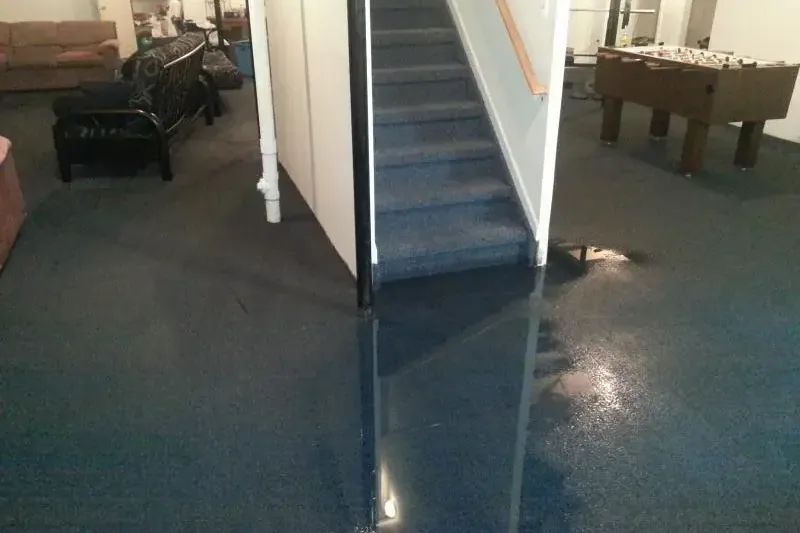 Basement Water RemovalLower room flooding requires a safe entry assessment and controlled water removal before concealed wall and floor moisture is addressed.
Follow water through the building
A room can look tidy while its floor layers remain saturated. A useful cleanup plan explains the wet boundaries, the materials being retained and the checks needed before repairs.
Measured boundaries
Readings at room edges and adjoining assemblies help distinguish a surface spill from water that has traveled beneath finishes, so the work area follows the damage.
Clear removal decisions
Materials should be evaluated for contamination, swelling and access. The owner needs to know why an item can remain or why removal is necessary for successful cleanup.
Useful project records
Photographs, affected material notes and drying readings create a practical account of the loss. Those records also help explain changes when concealed damage becomes accessible.
Repair readiness
Final checks should address retained layers before trim, paint or flooring conceals them. A dry appearance alone is an incomplete basis for closing a wet assembly.
A cleanup sequence tied to the damage
The work changes with the source and the building. Extraction, selective removal and drying are coordinated so each stage prepares the remaining materials for the next decision.
- 1
Define the affected area
The initial inspection follows visible water and tests adjacent surfaces, identifying safety restrictions and materials that need closer examination before equipment is positioned.
- 2
Remove what obstructs drying
Standing water and unsalvageable wet materials are addressed so retained framing, floor layers and other affected surfaces become accessible for cleaning and moisture removal.
- 3
Balance the drying conditions
Air movement and dehumidification are arranged around the exposed materials, with equipment placement adjusted as readings reveal slower areas or concealed pockets of moisture.
- 4
Document the remaining work
A completion assessment records material conditions and identifies rebuilding tasks. Repair decisions can then account for the actual damage rather than the original puddle size.
Separate supply water, household discharge and sewage
Pressurized supply release
A split supply pipe can spread water quickly through a room. Cleanup starts after safe source isolation and continues into adjoining materials that absorbed the release.
Follow pipe damageAppliance discharge
A wet appliance area may involve a supply connection or used wash water. The source and contact surfaces determine the cleaning approach and what can be retained.
Check beneath appliancesContaminated drain backup
Sewage requires restricted access and a controlled cleanup area. Absorbent finishes that contacted the discharge need a different evaluation from a clean supply water spill.
Assess contaminated cleanupWhat changes water cleanup costs in Lake Oswego?
A cleanup estimate depends on the source, affected layers and access for drying. The ranges below describe different scopes; an inspection is needed to identify the work required inside the particular property.
Contained wet area
- Accessible surface extraction
- Limited material exposure
- Focused drying setup
Several affected rooms
- Expanded moisture mapping
- Multiple wet assemblies
- Selective finish removal
Complex interior loss
- Concealed water pathways
- Extensive damaged materials
- More involved monitoring
Plumbing repair, replacement finishes and other rebuilding may have separate costs. A written scope should distinguish the cleanup work from those additional property repairs.
Document the loss as it changes
An insurer may ask about the cause, discovery and steps taken to limit further damage. Consistent photographs and work records help connect those questions to the condition of the property.
- Photograph the apparent source from a safe position
- Record the date the damage was first noticed
- Keep invoices for emergency work and source repairs
- List affected belongings before disposal becomes necessary
- Save moisture reports and any written changes to the scope
When paying for cleanup directly
An owner arranging cleanup without a claim still benefits from a detailed estimate. The work description should identify the wet rooms, retained materials and planned equipment.
Questions about removal, monitoring and rebuilding are easier to resolve before work expands. A changed condition behind a wall should be explained with photographs and an updated scope.
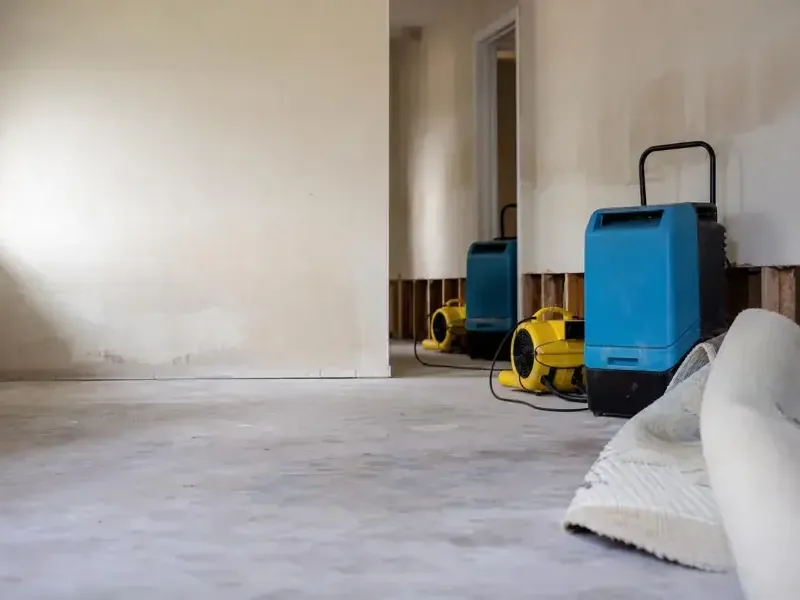
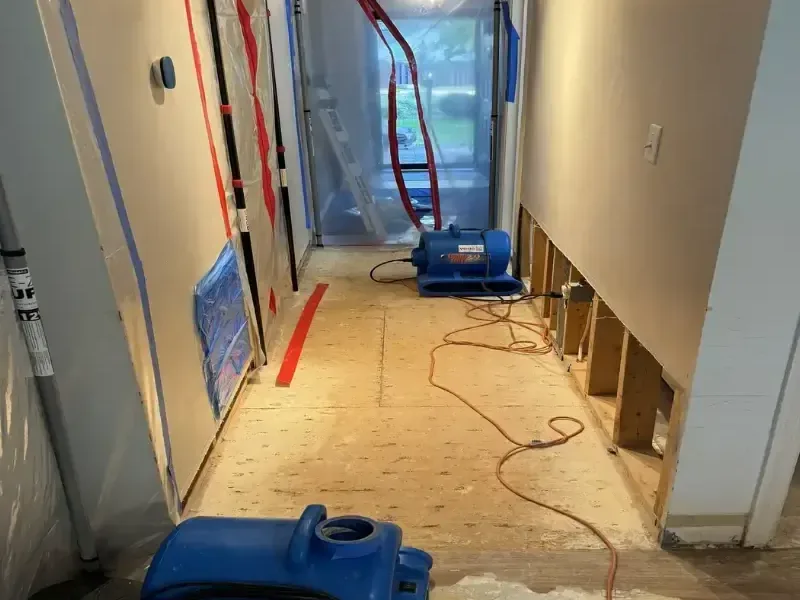
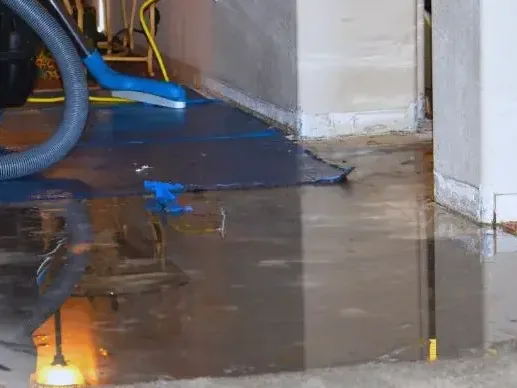
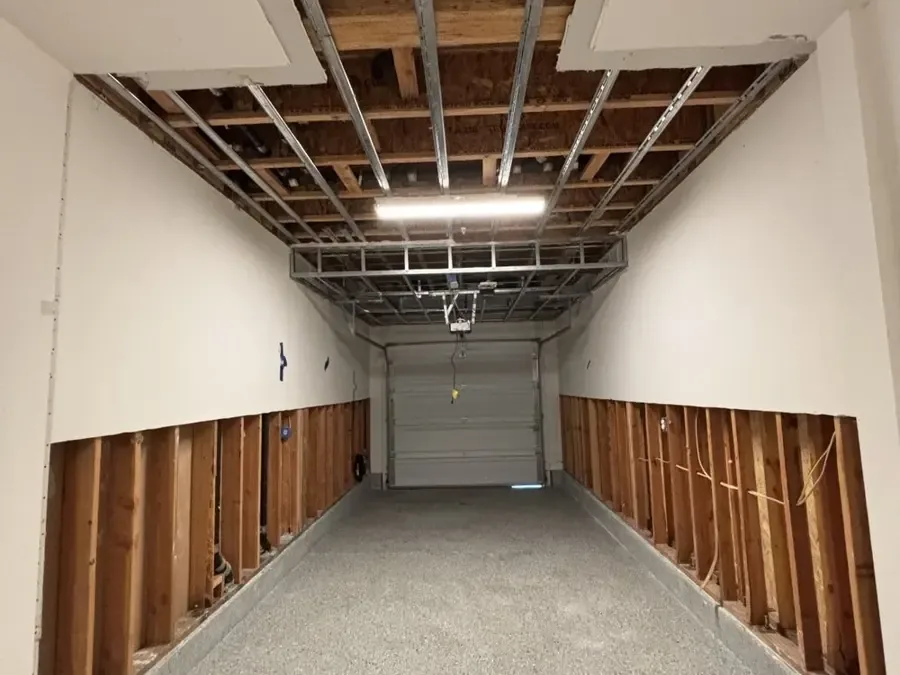
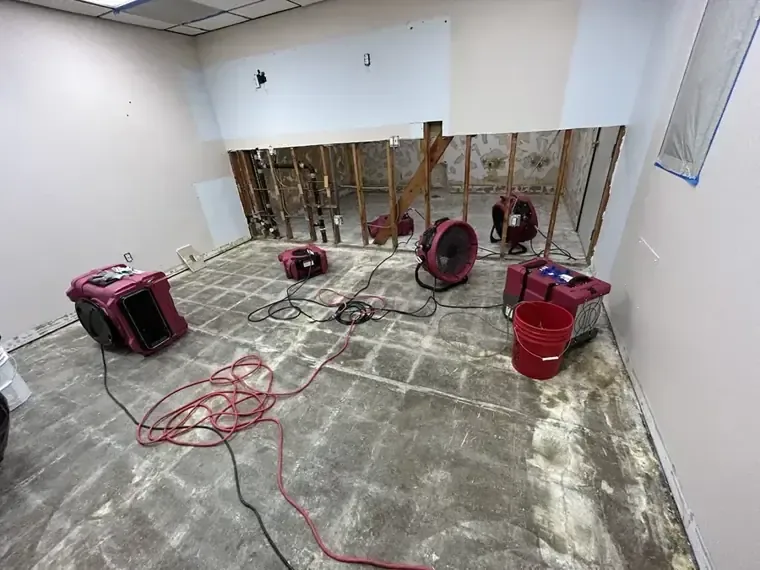
Exposed materials, wet rooms and equipment used for drying
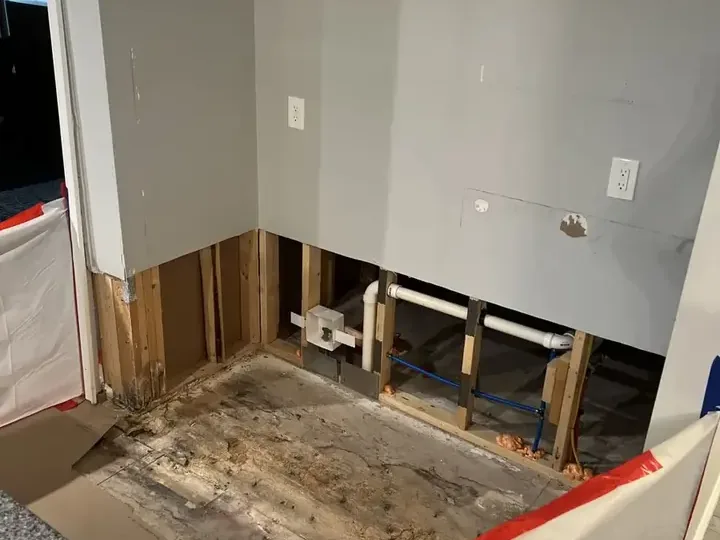
Describe the affected rooms when arranging service
A request can include the neighborhood, the suspected source and whether water remains active. Building access and any unsafe areas also help frame the initial inspection.
For a property near State Street or in Lakewood, the same practical details matter: which rooms are wet, what has been shut off and whether drain water is involved.
Rain, drains and indoor plumbing
Lake Oswego has both documented flood history and everyday household leak concerns. The useful starting point is the route water actually took into a room, followed by the materials along that path.
Leaves at catch basins
Leaves can obstruct storm drains and cause localized flooding. The city maintains public stormwater pipes and catch basins, while a property's interior still needs its own damage assessment.
Separate drainage systems
The stormwater system is separate from the sewer system. Identifying whether an indoor release came through a drain or across an exterior threshold changes cleanup decisions.
Winter sewer pressure
Unusually heavy winter rainfall challenges the city sewer system. Potential overflow areas may have restricted access, and sewage inside a building requires people to stay clear.
Damage during thawing
The city warns that pipes near exterior walls may freeze and burst. Water problems can become apparent when warmer temperatures return and the damaged pipe begins leaking.
Ordinary household leaks
Worn toilet flappers, dripping faucets and faulty irrigation are identified household leak sources. Indoors, repeated small wetting can damage finishes before a large puddle ever appears.
February 1996
Heavy rainfall and snowmelt flooded low areas around Oswego Lake and the Oswego canal. State Street and Foothills were also affected during that event.
Cleanup across Lake Oswego
Neighborhoods and districts
- Lake Grove
- Palisades
- Westlake
- Glenmorrie
- Hallinan Heights
- Mountain Park
- Waluga
- Foothills
Local ZIP areas
- 97034
- 97035
Questions about a wet property
01What should happen when water is still spreading?
A safe shutoff can limit a supply leak, while drain backups and outdoor entry require different source measures. Occupants should avoid water near electrical equipment and describe the active flow when requesting cleanup assistance.
02Can a dry surface still hide water damage?
Yes. Water can remain under floor coverings, behind baseboards or inside insulation after the visible surface improves. Material readings and selective access help establish whether those concealed layers need further drying or removal before repairs.
03Does every wet wall need to be removed?
Removal depends on the wall material, contamination and the ability to dry the assembly. Some finishes can remain after suitable cleaning and drying; damaged or inaccessible layers may need removal so retained framing can be treated properly.
04Why is the source part of the inspection?
Supply water, rainfall runoff and sewage create different cleaning needs. The entry path also shows where hidden damage may extend. Source repair and building cleanup should be coordinated because drying cannot compensate for water that keeps entering.
05How is the drying equipment arrangement decided?
Equipment placement follows the affected materials, available access and conditions inside the work area. Readings during the project show whether moisture is declining and whether a wall cavity or floor layer needs a different approach.
06What information helps with a claim?
Safe photographs of the source and damaged rooms, repair invoices and notes about discovery provide a useful starting record. The insurer determines coverage under the policy; the cleanup scope should explain the work and materials actually involved.
07What makes sewage cleanup different from extraction?
Sewage changes both access restrictions and material decisions. People and pets should avoid the affected area. Contaminated porous finishes may require removal, while retained surfaces need cleaning before drying equipment can complete the work safely.
08Are Lake Oswego ZIP areas included?
Service requests can identify 97034 or 97035 along with the neighborhood and affected rooms. The initial discussion should also cover safe access, active leaking and whether the property has ceiling damage or water around electrical equipment.
09When can replacement flooring be installed?
Installation should follow suitable moisture checks of the supporting materials and any product requirements for the new floor. Covering a damp substrate too early can leave the new assembly exposed to moisture that the original cleanup missed.
Start with the source and the wet materials
A clear account of the leak helps turn a wet room into a defined cleanup scope with practical next steps.