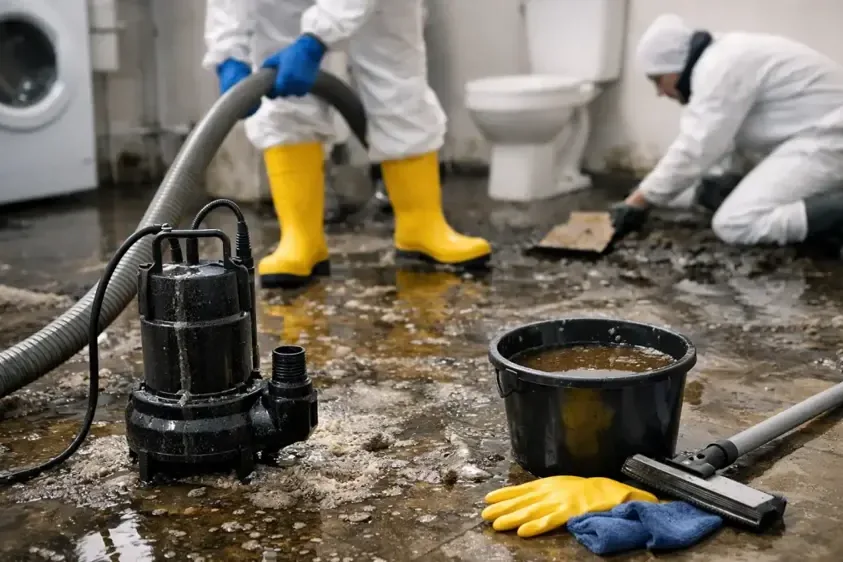
Wastewater rising through a fixture or spreading across a floor needs a controlled response. Lake Oswego identifies unusually heavy winter rainfall as a challenge for its sewer system and maintains an Overflow Response Plan. When sewage reaches an occupied building, the indoor work must account for contact with flooring, belongings and the routes people normally use through the space.
Key takeaways
- Restrict access to rooms containing sewage or wastewater residue.
- Report affected fixtures and any continuing rise in water to the appropriate contacts.
- Avoid carrying contaminated belongings through clean rooms.
- Separate drain correction from cleaning and removal inside the building.
- Complete cleaning and material assessment before setting the retained structure to dry.
Keep occupants away from the affected route
A backed up bathroom or utility area may interrupt the usual path through a home. The household needs a clear alternative route while the affected space is restricted.
Children, pets and anyone needing assistance should remain outside the wet room and away from items that contacted the wastewater.
Occupants should avoid testing fixtures repeatedly when wastewater is rising. The initial report can describe which fixture first changed, whether another drain is involved and whether the level continues to increase.
These observations give the responding drain professional a useful starting sequence.
The sewage backup cleanup service addresses the contaminated interior after access is assessed. Removing water, handling damaged contents and cleaning suitable surfaces require a plan that keeps residue from spreading into the rest of the building.
- Identify the affected bathroom or lower room by name.
- Keep people away from wet electrical devices and outlets.
- Report any blocked access to an essential room immediately.
Distinguish the municipal response from the room cleanup
The city restricts access around potential sewer overflow areas through its response procedures. Those restrictions should be observed when an outdoor overflow affects a route near the property.
Residents can report what is visible from a safe position without approaching wastewater or a restricted work area.
Inside the building, the contractor still needs an independent record of the affected fixtures and materials. A municipal response may address public infrastructure while a separate drain professional evaluates the building connection.
The owner should keep each work description with the same event file.
Lake Oswego has separate stormwater and sewer systems. A report should identify whether the observation concerns a storm drain outside or wastewater at an indoor fixture.
Clear descriptions help the relevant party assess the problem and reduce confusion when several water conditions occur during rain.
- Record outdoor observations separately from indoor room photographs.
- Keep municipal notices and contractor findings in the same folder.
- Describe the fixture or drain instead of guessing a hidden blockage location.
Mark where contamination traveled
The boundary can include more than the original pool around a drain. Footprints, moved rugs or a dripping container may extend contact into adjacent space.
The cleanup team should identify those routes before arranging equipment and sorting belongings.
A floor plan can mark the affected area and show which rooms remained clean. Furniture legs, low shelves and the underside of storage containers should be included where contact occurred.
This information helps the team distinguish washable items from materials needing a different handling decision.
The municipal material notes that a large uncontained spill can reach lake or canal waters. Around the property, cleanup water and residue should be managed through an appropriate professional disposal plan.
Occupants should avoid pushing contaminated water outdoors toward drains or neighboring surfaces.
- Include the path used by anyone who walked through the affected room.
- Mark movable rugs and containers that changed position after contact.
- Keep clean storage separated from the sorting area.
Assess porous finishes before selecting a method
Carpet backing, padding, wallboard and other absorbent materials need evaluation based on wastewater contact and condition. A dry looking surface can still have residue within its layers.
The removal plan should explain which materials are unsuitable to retain and how their removal will be contained.
Hard surfaces suitable for cleaning require access along edges and joints as well as open floor areas. A cabinet toe space or wall junction can hold residue beyond easy view.
The scope should name these locations so they are not lost in a general description of floor cleaning.
The item inventory should preserve recognizable descriptions and photographs before disposal when safe handling allows. Owners can identify valuable or irreplaceable contents for specialist consideration early.
That conversation is easier before damaged items are combined into waste containers.
- List floor finish, backing and underlying material separately.
- Record the reason an item is removed or referred for specialist care.
- Photograph the exposed surface after controlled material removal.
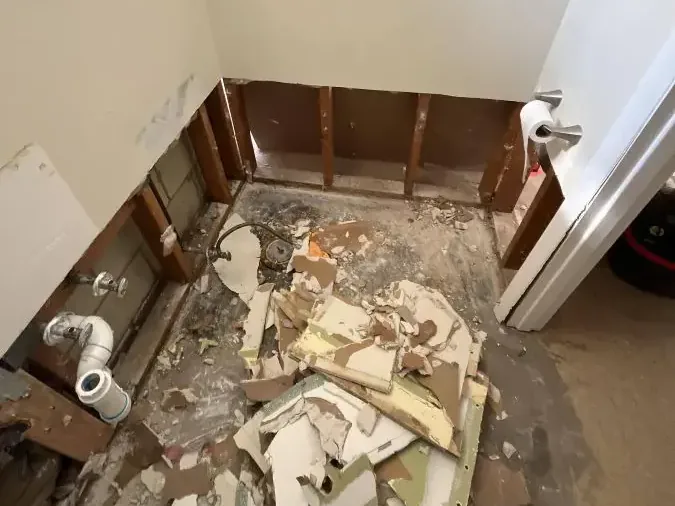
Sequence recovery around cleaning access
Liquid recovery and material removal create access for cleaning. The water extraction work should be planned for the water condition, with handling that protects unaffected spaces.
Household equipment and improvised cleanup can spread wastewater across areas intended to stay clean.
The team can explain which retained surfaces require cleaning before drying equipment is placed. Work should reach the actual contact area rather than just the visible center of the room.
Where fixed furnishings block that access, the contractor should document the additional opening or removal needed.
Equipment routes deserve the same attention as material routes. A hose passing through a clean doorway and bags leaving the building both need planned handling.
The owner should know where personnel will enter and which doors will remain restricted during the cleanup.
Dry the structure after the contamination work
Retained framing and other suitable materials can remain wet after accessible residue has been addressed. Drying should follow the condition of those materials and the access created during cleanup.
Monitoring locations need to identify the same surfaces each time the technician returns.
The structural drying service can document the response of retained materials through those repeated checks. The closing record should explain which areas reached the intended condition and whether any remaining cavity requires further work before repair.
Odor alone should not serve as the completion record for the room. The owner needs an account of removal, cleaning and material evaluation as well as the drying results.
These records give the repair contractor a clearer basis for restoring finishes and returning the room to service.
Organize reopening around the remaining tasks
The final walkthrough should revisit the fixture where the problem appeared, the contaminated floor area and the routes used during cleanup. The owner can compare each location with the original diagram.
A task list should identify any drain repair or finish replacement still required.
Lakewood, Glenmorrie and Hallinan Heights are recognized local neighborhoods. For an affected property in these areas, a useful work order still names the room, fixture and material involved.
This detail keeps communication precise when municipal staff, a drain contractor and a restoration crew each handle part of the response.
The household should receive clear instructions about which areas can be used and which remain restricted. Repair appointments, retained contents and disposal records should be included in the handoff.
Questions about coverage belong with the insurer while the contractors document their respective work.
Questions
Should an owner wash sewage toward an outside storm drain?
Wastewater and residue need an appropriate disposal method selected by the cleanup professionals. The stormwater system is separate from the sewer system, and contaminated material should remain within a controlled work plan.
What information helps when several fixtures are affected?
The report can list the fixtures in the order changes were noticed and describe whether water is still rising. Room photographs and observations from safe locations help the drain professional assess the extent.
Will the city overflow response restore the inside of a home?
Indoor recovery should have its own contractor scope describing contaminated rooms, contents and retained materials. Municipal infrastructure findings can be kept beside that scope so the owner has a connected event record.
Why is the floor checked after contaminated carpet is removed?
Removing the finish exposes the underlying surface and its edges for inspection and cleaning. The condition found there determines the next material decision and the access needed for subsequent drying.