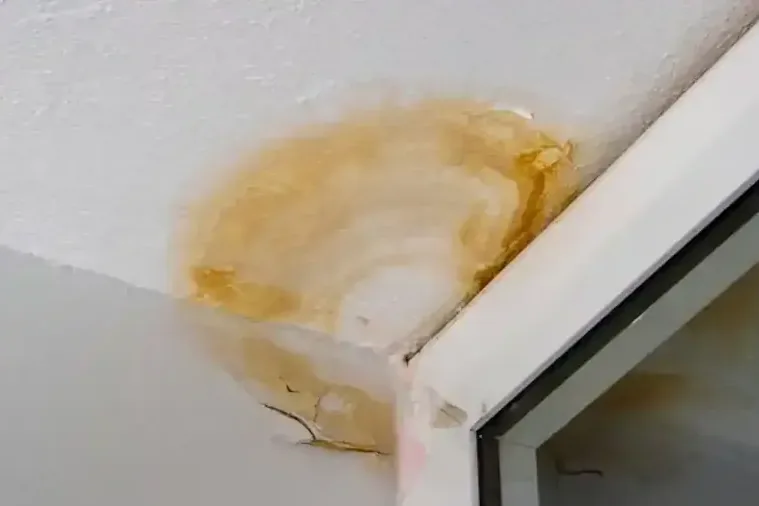
An overhead stain deserves a closer look even when the room floor is dry. Water can collect above a finish, move along framing and emerge at a corner far from the original source. The first assessment considers whether the ceiling is stable and how the wet cavity can be reached safely. Paint and surface appearance come later, after the concealed materials have been evaluated.
Use the stain as a starting point
The outline of discoloration helps focus inspection but may not show the full wet boundary. A ceiling joint, light opening or wall corner can become an outlet for water travelling across the assembly. The assessor should consider what sits above the room and whether the source continues releasing water. Photographs can preserve the initial stain before access openings change it.
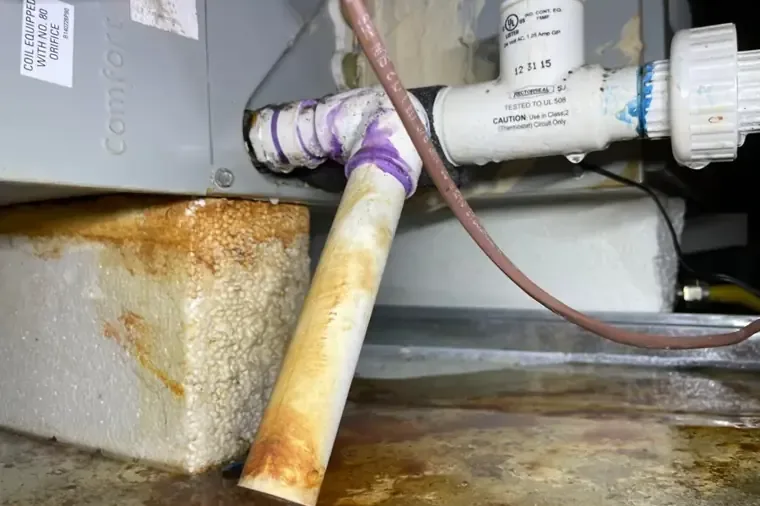
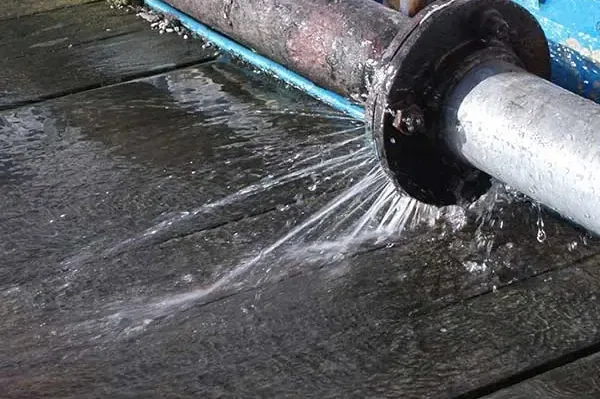
Where cooling equipment is involved, condensate leak cleanup connects the ceiling symptom to the equipment surroundings. A plumbing failure may require burst pipe cleanup across the cavity and any connected rooms below the release.
Open and dry the assembly deliberately
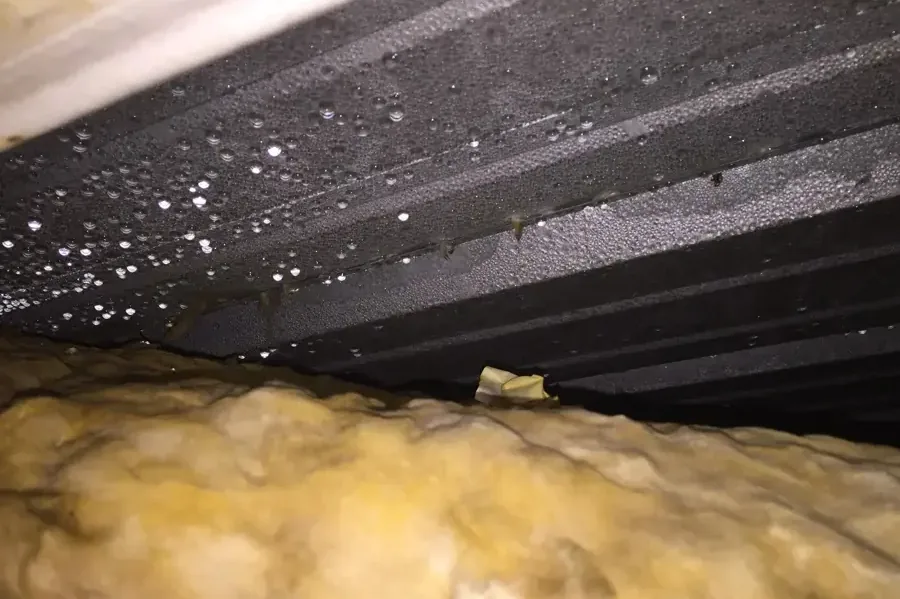
Controlled opening provides access to trapped water and damaged insulation while limiting exposure beneath unstable material. The decision should account for the finish condition and the work needed above it. Retained framing and adjoining wall tops require moisture checks, with equipment arranged for the exposed assembly rather than simply blowing across the room.
- Keep furniture away from the area under a sagging or softened section.
- Photograph the stain together with nearby fixtures and adjoining wall corners.
- Inspect insulation that remained in contact with water above the visible finish.
- Confirm the source correction before replacement ceiling materials close the cavity.
Coordinate concealed repairs before the final patch
Wait Park has a reservable gazebo, Locust Street Park includes a playground, and Maple Street Park has a baseball diamond. These references can help arrange access to a Canby property. Inside, the repair plan needs the room location and the source above it.
Oregon requires a plumbing permit for changing concealed piping inside a wall, ceiling or under a floor in detached one or two family dwellings. Pipe alteration and overhead drying should be coordinated so a finished patch follows the condition of the whole affected assembly.