West Linn Water Damage RestorationWater extraction and structural drying
Cooling equipment overflow

AC Condensate Leak Cleanup in Canby

A blocked condensate drain can leave a small stain while water continues collecting out of sight. Canby cleanup planning checks the equipment surroundings and follows overflow into the finishes below or beside it.

(888) 373-8814Check the overflow damage
  • Inspect pan surroundings
  • Follow concealed drips
  • Dry affected finishes
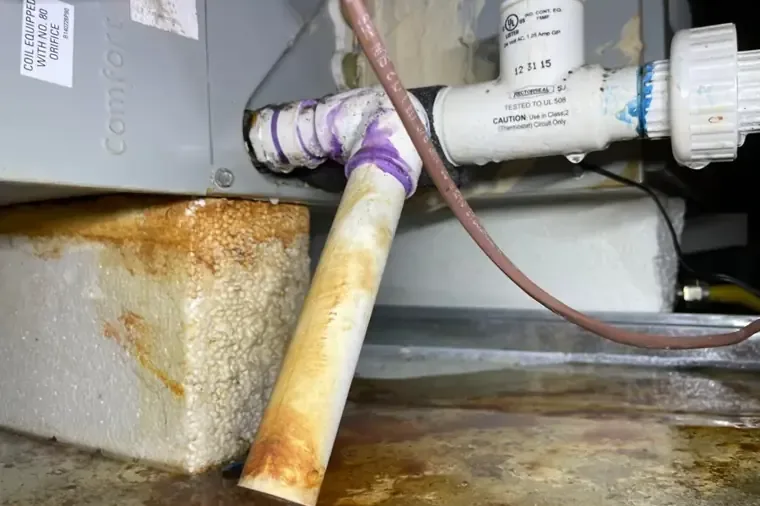
Rust staining around the condensate pan and drain connection beneath an air handler
Common signalStaining beneath equipment
Source taskRestore proper condensate drainage
Cleanup focusSurrounding wet building materials
Closing checkHidden moisture condition
First steps

What to do before AC condensate leak cleanup

  1. Stop using affected equipment safely. A suspected overflow should be referred to the equipment technician, with operation managed through safe accessible controls. Occupants should avoid reaching into wet electrical components or concealed equipment spaces.
  2. Mark the visible change. Record the stain location and whether it expands during equipment use. Photos showing the surrounding ceiling or wall help establish where later inspection needs to follow the water.
  3. Protect the room below. Move people and unaffected belongings away from soft or sagging ceiling materials. A clear area below the damage supports inspection without exposing occupants to falling wet debris.
  4. Arrange access to the enclosure. Identify closet doors, attic access and stored items near the equipment. Permission and safe access should be established before anyone attempts to inspect the platform or nearby concealed finishes.

AC Condensate Leak Cleanup assessment

Locate the overflow footprint
Inspection starts around the pan and follows affected finishes. The footprint records water damage separately from the mechanical defect that caused the release.
Assess overhead and hidden layers
Ceiling cavities and enclosed wall sections are checked where symptoms suggest retained water. Material condition determines whether access openings or removal are necessary for effective recovery.
Direct drying into affected materials
The setup targets the assembly that absorbed water, with dehumidification supporting moisture removal. Readings help distinguish a drying surface from a cavity that remains damp.
Confirm the repair sequence
Source correction and the final material assessment are recorded together. That sequence allows enclosure repairs to proceed after the overflow is resolved and affected layers are ready.
How the work proceeds

How AC condensate leak cleanup is handled

  1. 1

    Locate the overflow footprint

    Inspection starts around the pan and follows affected finishes. The footprint records water damage separately from the mechanical defect that caused the release.

  2. 2

    Assess overhead and hidden layers

    Ceiling cavities and enclosed wall sections are checked where symptoms suggest retained water. Material condition determines whether access openings or removal are necessary for effective recovery.

  3. 3

    Direct drying into affected materials

    The setup targets the assembly that absorbed water, with dehumidification supporting moisture removal. Readings help distinguish a drying surface from a cavity that remains damp.

  4. 4

    Confirm the repair sequence

    Source correction and the final material assessment are recorded together. That sequence allows enclosure repairs to proceed after the overflow is resolved and affected layers are ready.

Planning the work

What does AC condensate leak cleanup cost in Canby, OR?

Condensate damage pricing in Canby reflects the wet building materials and the access needed beneath or beside the equipment. Drain correction is a separate source task, while cleanup costs follow the actual overflow damage.

Small accessible drip area

$600 to $1,400
  • Exposed damp surface
  • Limited finish impact
  • Simple equipment access

Wet ceiling or wall cavity

$1,400 to $2,800
  • Hidden insulation checks
  • Selective finish opening
  • Directed cavity drying

Repeated concealed overflow

$2,800 to $4,000+
  • Broader material saturation
  • Multiple access points
  • Expanded moisture monitoring

The scope reflects water category, affected area, material class and the delay before drying. water damage cost calculator.

A condensate problem can be easy to underestimate because the visible drip is small. Water may collect beneath an equipment platform, soak a ceiling cavity or run behind a closet wall before reaching the room. Restoration begins with the surfaces around the equipment and works outward. Clearing the drainage problem stops further overflow, while the absorbed water still needs its own attention.

Inspect below the pan as well as beside it

Canby has warm, dry summers. Where a property uses cooling equipment, an overflow assessment should examine the actual installation and the materials beneath it. A damp platform, wet insulation or stained ceiling each calls for different access. An equipment technician can address the drain or pan, with restoration work directed toward the wet building components nearby.

Safe observation is useful before the equipment area is disturbed. Photos of the first stain and the surface directly below it help connect the room symptom to the equipment location. Occupants should leave electrical controls and inaccessible overhead equipment to the appropriate technician.

Separate a shallow drip from cavity saturation

A surface towel can remove a visible puddle while hidden insulation continues holding moisture. The inspection should check the lower boundary of the stain, wall corners and any floor covering beneath the equipment. Ceiling leak restoration can address overhead materials when the overflow path extends into a room below.

  • A pan edge may direct water toward one side of the platform.
  • Repeated dripping can wet several layers beneath a small stained area.
  • Closed closet finishes can restrict access to the affected wall base.
  • A dry equipment exterior can coexist with damp material underneath it.

Finish with a material based drying decision

Legacy Park has a playground and soccer field, while Daphne Glen Park also includes those features. Together with Ivy Street, these are useful references for arranging a property visit. Inside the building, structural drying follows the wet assembly rather than the size of the equipment.

The handoff should identify the corrected overflow, materials removed for access and remaining repair needs. New paint belongs after the cavity condition has been checked.
Service area

AC condensate leak cleanup coverage

An assessment near Legacy Park, Daphne Glen Park or Ivy Street starts with the equipment location and safe access. Details about an attic opening, utility closet or ceiling stain help identify the surfaces needing inspection below the overflow.

The same service nearby: AC condensate leak cleanup in West Linn, Wilsonville, Sherwood.

Water damage restoration in Canby · every town covered
Questions

AC Condensate Leak Cleanup questions

01Can a little condensate create ceiling damage?

A small repeated release can reach absorbent ceiling materials and insulation. The extent depends on its path and how long water remained there, so the stain deserves more than a surface wipe.

02Does clearing the drain dry the platform?

Drain correction stops the overflow mechanism. Materials that absorbed water beneath the equipment may still require extraction, access or controlled drying before the enclosure can be repaired or closed.

03Should the stained ceiling be painted first?

Painting should follow inspection and drying of the affected layers. Covering the mark while hidden materials remain damp can obscure the visible symptom without resolving the condition that produced it.

04Who checks the cooling equipment itself?

An appropriate equipment technician evaluates the drain, pan and mechanical operation. The restoration scope addresses water damage to surrounding building materials, with both tasks coordinated to prevent continued overflow during drying.

05Why inspect a wall beside the closet?

Water can run along the platform edge and behind a wall finish. Checking nearby wall bases helps find the lower extent of the release even when the closet floor looks improved.

06What helps prepare an equipment access visit?

Identify the enclosure location, nearby storage and the first place water became visible. A photograph of the room symptom can help connect hidden equipment access with the interior surfaces needing assessment.

24/7 water restoration

Look beneath the overflow area

A targeted assessment connects the pan surroundings with damp finishes that may need drying before the room is repaired and used normally.

(888) 373-8814Wet rooms? Call