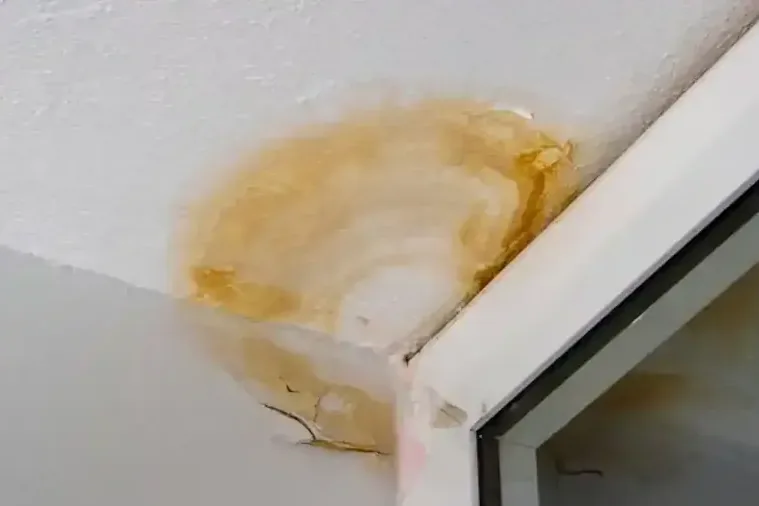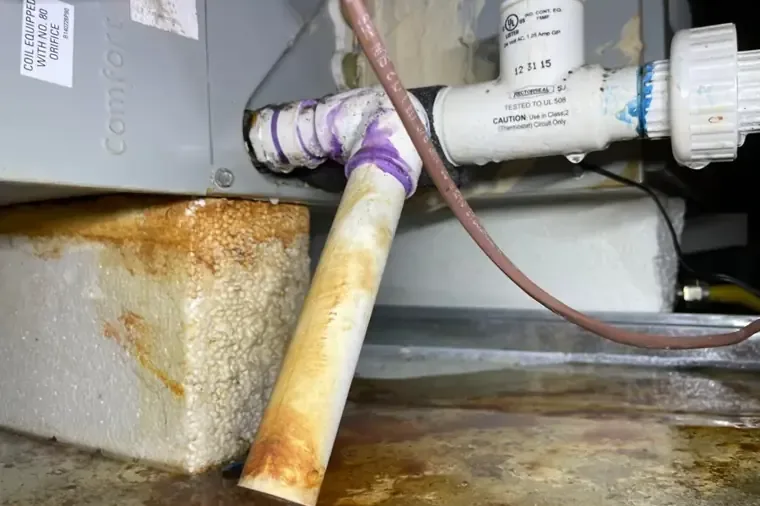
A condensate overflow can wet the same small area repeatedly before a homeowner notices a stain. That repeated contact may saturate insulation or soften wallboard beneath an air handler. Cleanup in Happy Valley needs to establish how far the water traveled, including finishes that remain hidden behind the first visible mark.
Inspect beneath the cooling equipment
The pan and drain need an equipment service assessment, while nearby building materials need their own moisture inspection. A repaired drain does not remove absorbed water from a ceiling. The cleanup record should identify the equipment position, accessible wet surfaces and areas where a cavity prevents direct inspection.
Happy Valley borders Sunnyside and Pleasant Valley, with Scouters Mountain rising above the city. For a home in this setting, the unit's actual installation position determines the inspection route. A leak above living space calls for different access than equipment beside an exposed utility floor.
Find the repeated drip's hidden reach
Small releases can follow framing, drain openings or the edge of a platform. A stain below may be narrower than the wet insulation above it. Selective access allows assessment of material condition and helps determine whether insulation or damaged wallboard should be removed. Retained surfaces then need a drying method that reaches the damp area.
- Check the underside of the equipment platform where access is safe.
- Inspect adjoining trim for swelling caused by repeated water contact.
- Compare the ceiling stain with moisture measurements around its perimeter.
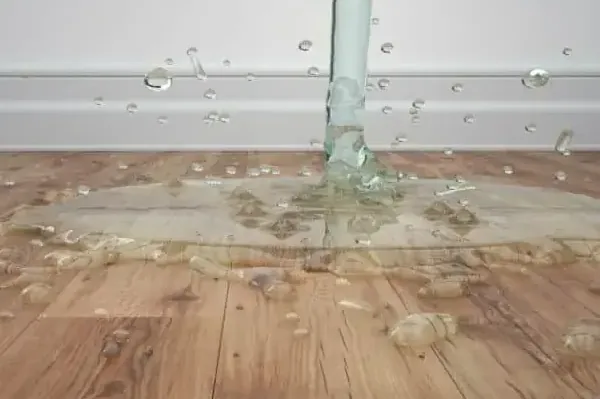
- Record damp flooring if overflow has reached a room below.
Coordinate restart with the drying work
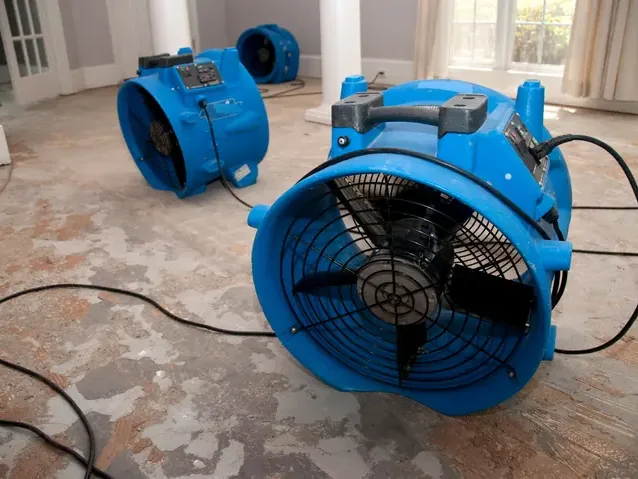
The cooling system service professional addresses the fault and safe operation. Interior cleanup may involve ceiling cavity recovery or drying retained assemblies. Equipment should not be restarted simply to help dry the room when the overflow cause remains unresolved.
Follow up checks should distinguish residual moisture from renewed dripping. Notes about the corrected fault and the materials dried make the repair handoff clearer, especially before a ceiling opening is closed and painted. Any new wetting should be reported before cosmetic repairs proceed.