West Linn Water Damage RestorationWater extraction and structural drying
Moisture beneath the finish

Slab Leak Water Damage in Happy Valley

A persistent damp patch can point to water beneath a floor, but cleanup needs the actual wet boundary. Happy Valley slab leak work pairs flooring assessment with plumbing coordination before damaged finishes are closed again.

(888) 373-8814Assess the damp floor layers
  • Underfloor moisture assessment
  • Plumbing repair coordination
  • Flooring access decisions
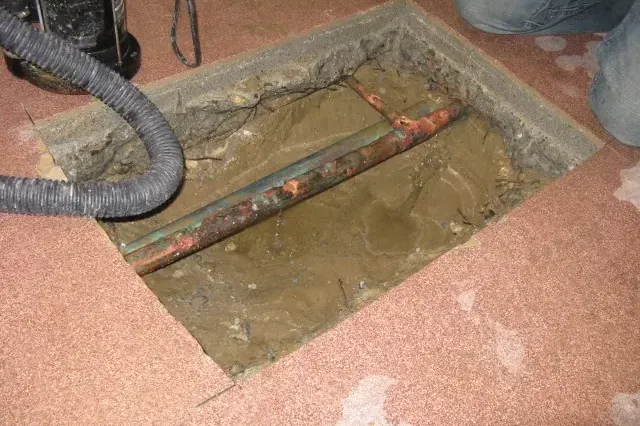
Exposed copper pipe in a concrete-floor trench beside a vacuum hose
Initial symptomPersistent moisture beneath flooring
Source taskPlumbing diagnosis and repair
Cleanup taskAssess affected finish layers
Before replacementCheck substrate moisture condition
First steps

What to do before slab leak water damage

  1. Limit traffic over changed flooring. Avoid walking on lifted boards, loose tile or softened floor layers. Furniture movement can damage weakened finishes and should wait for a safe access plan.
  2. Describe the recurring dampness. Note where moisture returns after wiping and whether nearby wall bases have changed. These observations help the inspection focus on the connected floor area.
  3. Arrange plumbing diagnosis. A plumbing professional needs to identify and control the source. Share any repair findings with the cleanup team so access openings and moisture checks can be coordinated.
  4. Keep the floor accessible. Remove only dry, movable belongings from a safe position. Leave fixed cabinetry and damaged finish removal to the agreed scope rather than opening the floor blindly.

Slab Leak Water Damage assessment

Establish the wet perimeter
Testing compares the visibly affected spot with surrounding flooring and wall bases. Notes identify finish types and areas where access limits the initial assessment.
Align access with plumbing
The repair plan is reviewed before floor openings expand. Cleanup follows absorbed moisture outside the plumbing access area and records materials exposed during the work.
Treat retained wet layers
Suitable assemblies receive drying after extraction or removal as needed. Equipment is placed to address the actual retained materials rather than only the repaired opening.
Document readiness for finishes
Substrate checks support the transition to flooring work. The record identifies measured areas, removed layers and any conditions requiring further attention before the replacement system is installed.
How the work proceeds

How slab leak water damage is handled

  1. 1

    Establish the wet perimeter

    Testing compares the visibly affected spot with surrounding flooring and wall bases. Notes identify finish types and areas where access limits the initial assessment.

  2. 2

    Align access with plumbing

    The repair plan is reviewed before floor openings expand. Cleanup follows absorbed moisture outside the plumbing access area and records materials exposed during the work.

  3. 3

    Treat retained wet layers

    Suitable assemblies receive drying after extraction or removal as needed. Equipment is placed to address the actual retained materials rather than only the repaired opening.

  4. 4

    Document readiness for finishes

    Substrate checks support the transition to flooring work. The record identifies measured areas, removed layers and any conditions requiring further attention before the replacement system is installed.

Planning the work

What does slab leak water damage cost in Happy Valley, OR?

Slab leak water damage costs in Happy Valley depend on finish layers, wet wall bases and access around the repair. The cleanup estimate should separate material drying and removal from plumbing diagnosis and pipe replacement.

Limited finish damage

$1,200 to $2,500
  • Small damp boundary
  • Accessible finish layers
  • Targeted surface measurements

Trapped floor moisture

$2,500 to $4,500
  • Concealed substrate checks
  • Selected covering removal
  • Adjoining wall assessment

Multiple affected layers

$4,500 to $6,000+
  • Several material interfaces
  • Expanded drying access
  • Complex repair handoff

The scope reflects water category, affected area, material class and the delay before drying. water damage cost calculator.

When a floor remains damp after surface water has been wiped away, the layers underneath need attention. A suspected slab leak in Happy Valley calls for plumbing diagnosis alongside a material inspection. Water trapped under a finish can extend beyond the spot that first changed color, lifted or felt damp underfoot.

Start with the floor assembly

The inspection identifies the finish, underlying layers and adjoining wall bases. A floating floor, adhered finish and exposed concrete present different access needs. Moisture readings should be interpreted for the material being tested, with visible condition recorded alongside the measurements. Removing every surface immediately can create unnecessary damage; leaving saturated layers enclosed can obstruct drying.

The city grew rapidly beginning in the late 1990s. Mount Scott, Scouters Mountain and the bordering area of Pleasant Valley help describe the local setting. At the property itself, the useful construction details are the actual floor assembly and any accessible route to the damaged pipe.

Coordinate an opening with the repair

Plumbing work may require access through the floor. Cleanup planning should account for that opening and for water already absorbed beyond it. The plumber's repair area and the full moisture boundary can differ substantially. Photographs of exposed layers help document their condition before the opening is restored.

  • Inspect adjacent wallboard where moisture reaches the floor perimeter.
  • Check transitions into rooms with different floor coverings or elevations.
  • Identify cabinet bases that may conceal damp substrate beneath them.
  • Keep removed finish samples or photographs with the damage record.

Prepare the surface for future finishes

Controlled material drying addresses retained wet layers once the source is corrected and access is suitable. If accessible water is present, floor water extraction may precede that phase. Neither task substitutes for a sound plumbing repair beneath the floor.

Final checks should consider the replacement system's requirements. A surface that feels dry may still be unsuitable for adhesive or a new covering. The handoff should identify the materials tested, any remaining access needs and the work completed around the repaired pipe before new finishes are installed.
Service area

Slab leak water damage coverage

Happy Valley property access should include the affected floor covering and any plumbing diagnosis already completed. Explain whether furniture, cabinetry or occupied rooms restrict inspection so the cleanup scope can account for the surfaces that remain difficult to reach.

The same service nearby: slab leak water damage in West Linn, Lake Oswego, Canby.

Water damage restoration in Happy Valley · every town covered
Questions

Slab Leak Water Damage questions

01Does damp flooring always mean a slab leak?

Other sources can produce similar symptoms. Plumbing diagnosis is needed to identify an underfloor pipe failure, while moisture assessment establishes the wet building materials. The cleanup scope should follow those findings rather than the symptom alone.

02Will the entire floor need removal?

Removal depends on the spread of moisture, material condition and access for drying. Some areas may remain suitable for treatment. The inspection should explain where removal is needed and why adjoining retained areas can be managed differently.

03Can a repaired pipe leave wet walls?

Yes. Water released before the repair may have reached wallboard or insulation around the floor perimeter. Those materials require inspection even after the pipe stops leaking, especially where wall finishes conceal moisture beside the original damp area.

04Why test under a floor transition?

Transitions can conceal a change in material or a path into another room. Checking them helps determine whether moisture stops at the visible boundary or continues beneath a different covering that has not yet shown surface damage.

05Is concrete ready when it looks dry?

Appearance alone is insufficient for a replacement floor decision. Appropriate moisture testing and the installation requirements matter. The flooring professional should receive the drying record and confirm that the substrate is suitable for the selected finish system.

06What should the final record include?

The record should distinguish plumbing repair from cleanup, identify removed flooring and describe retained materials tested during drying. Photographs of exposed areas are useful when a future installer needs to understand what lies beneath the new surface.

24/7 water restoration

Resolve the water left beneath finishes

A coordinated cleanup plan connects the pipe repair with wet flooring, adjoining wall bases and the checks needed before replacement.

(888) 373-8814Wet rooms? Call