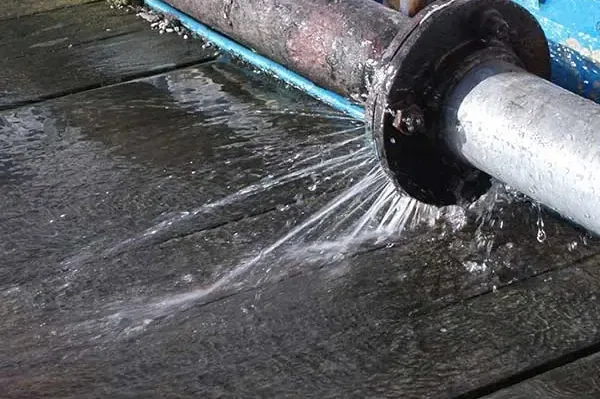
A recurring damp patch beneath a floor covering deserves a source investigation before new flooring is ordered. In Lake Oswego, slab leak cleanup separates the plumbing problem from the building materials it has affected. Repairing a buried pipe stops the release, but the moisture already held above the concrete needs its own assessment.
Distinguish indoor supply water from outside entry
The local water system includes municipal distribution, while stormwater drains operate separately from the sewer system. Oswego Creek connects the lake outlet to the Willamette River, and the Oswego canal forms another part of the local water setting. A wet interior floor should be traced to its actual source rather than attributed to nearby water features. Plumbing diagnosis and material moisture mapping answer different parts of that question.
Inspect the layers between concrete and room air
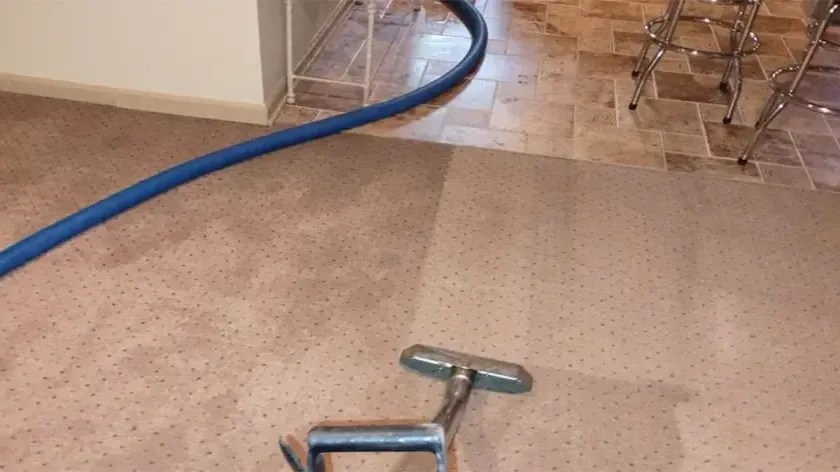
Floor coverings can hold water against adhesives, backing and the substrate. At an edge, that moisture may also reach a wall plate or cabinet base. An inspection should compare the recurring wet spot with nearby materials and follow changes across thresholds. The access required depends on the installed assembly and its physical condition.
- Lifted seams or softened edges can reveal where trapped moisture has affected finishes.
- Closet floors may share the same wet layer beneath an apparently separate room.
- Adhesive condition matters when deciding whether a covering can be retained safely.
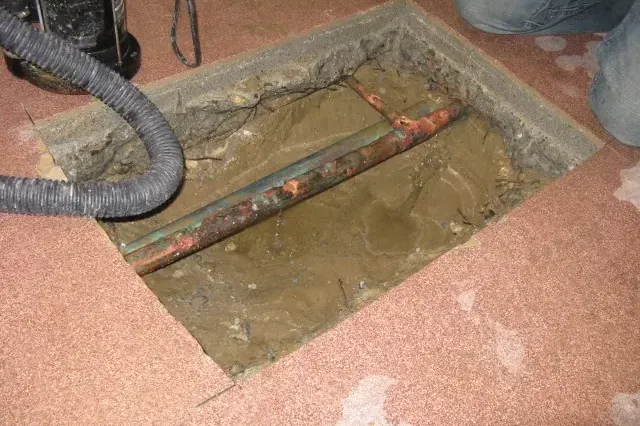
- Pipe access openings need coordination with the surrounding floor damage assessment.
Plan replacement around the substrate condition
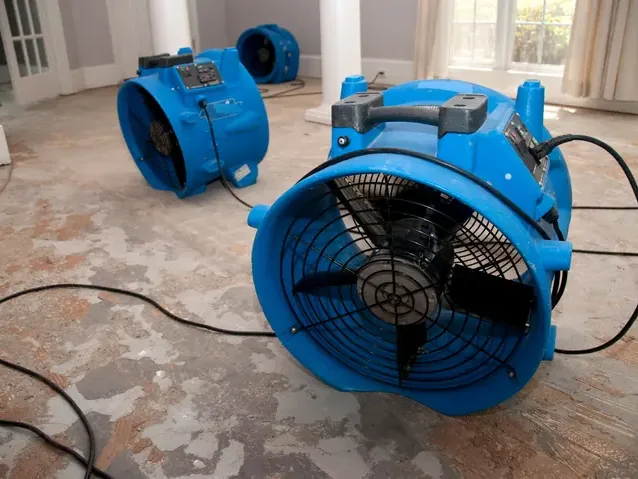
Structural drying should target the retained layers after the water source is controlled. Where recoverable water remains, extraction may precede that work. Readings help identify whether the substrate is improving or whether a concealed layer still prevents effective drying.
The handoff should distinguish pipe repair, moisture mitigation and replacement flooring. A fresh finish can conceal continuing dampness, so installation decisions should reflect the condition of the supporting material and the requirements of the replacement product.