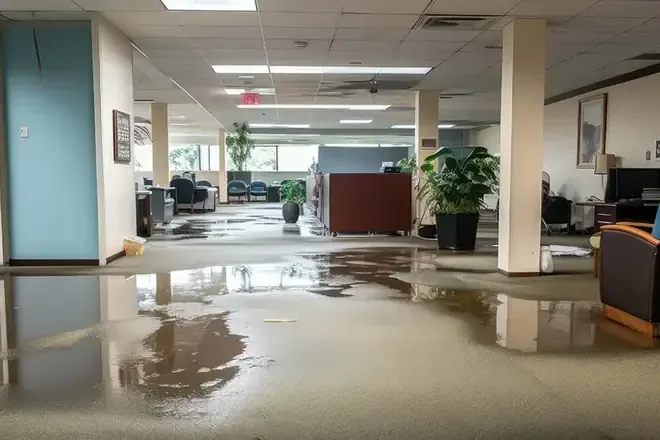
Commercial water damage affects more than the wet finish. Staff may need an alternate route, stock may need controlled movement and a property representative must approve access or removal. Establishing those decisions early allows the recovery plan to address the affected building materials while keeping essential information and authorization available throughout the work.
Match access planning to the occupied space
Sherwood Public Library, Sherwood Center for the Arts and Sherwood High School are local community destinations. Buildings used by staff, visitors or groups benefit from clear communication about restricted areas. For an affected commercial property, the assessment should identify normal occupancy patterns and how the actual wet work zone changes entry, circulation and access to essential rooms.
A business with several responsible parties needs a named decision maker for mitigation. The owner, tenant and equipment service contact may each control different parts of the response. A clear scope records who authorizes contents movement, who addresses the water source and who receives progress updates.
Protect contents while the wet boundary is mapped
Stock, records and equipment need evaluation based on actual exposure. Moving items without a plan can mix wet and dry contents or block access to damaged walls. The inspection should document affected areas and establish suitable staging space before recovery begins. Powered devices exposed to water need appropriate assessment rather than immediate reuse.
- Keep emergency exits and required access routes clear of equipment.
- Record contents movement so affected items remain identifiable during recovery.
- Separate source repair permissions from approval for finish removal.
Use material condition to plan the next operating stage
Water extraction and structural drying can be staged around safe work areas when the layout allows it. Occupancy decisions still depend on hazards, contamination and the current scope. The handoff should explain which rooms are ready for repair or use and what remains restricted, with progress tied to measured material conditions rather than an assumed reopening date.