West Linn Water Damage RestorationWater extraction and structural drying
Moisture beneath floor finishes

Sherwood Slab Leak Water Damage

A damp floor over concrete deserves investigation before replacement flooring is ordered. In Sherwood, meter observations can help flag an indoor leak while a property specific assessment determines where water has traveled beneath the finish.

(888) 373-8814Discuss damp flooring over concrete
  • Meter observations
  • Concealed floor moisture
  • Plumbing and drying coordination
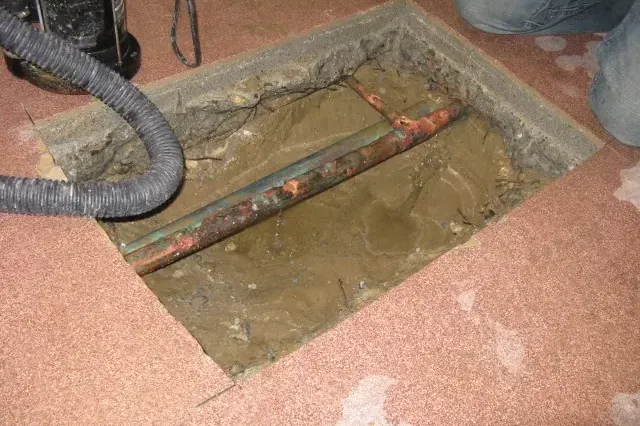
Exposed copper pipe in a concrete-floor trench beside a vacuum hose
Initial clueUnexplained indoor water use
Construction checkActual layers beneath flooring
Trade coordinationPipe repair and drying
Finish timingSubstrate condition comes first
First steps

What to do before slab leak water damage

  1. Note the floor changes. The owner should record damp seams, lifting edges and nearby wall marks without prying up finishes. The pattern can help connect hidden moisture to the affected assembly.
  2. Check safe supply control. A plumber can assess whether the water supply needs isolation and how to investigate the suspected pipe. Access to buried or concealed plumbing requires an appropriate repair plan.
  3. Share meter observations. Any recorded consumption changes should be passed to the plumbing contact alongside the timing of visible damage. Those details support source investigation while restoration examines the wet materials.
  4. Protect adjoining finishes. Dry contents should remain away from the affected floor. The property contact should identify sensitive adjacent finishes and room access needs before invasive inspection or pipe repair begins.

Slab Leak Water Damage assessment

Establish floor construction
The assessment identifies the visible finish and accessible underlying layers, then maps damp areas and adjacent wall bases to define the affected interior more precisely.
Align with plumbing access
The repair plan and cleanup plan are coordinated so opening the floor exposes the required pipe area while allowing assessment of nearby water damaged materials.
Evaluate retained substrates
After liquid recovery and necessary removal, retained surfaces are checked for moisture and condition. Equipment placement accounts for drying access through the actual exposed assembly.
Document readiness for finishes
Repeat readings support the drying decision, while the handoff identifies substrate preparation and remaining repairs. Flooring installation requirements remain part of the final repair coordination.
How the work proceeds

How slab leak water damage is handled

  1. 1

    Establish floor construction

    The assessment identifies the visible finish and accessible underlying layers, then maps damp areas and adjacent wall bases to define the affected interior more precisely.

  2. 2

    Align with plumbing access

    The repair plan and cleanup plan are coordinated so opening the floor exposes the required pipe area while allowing assessment of nearby water damaged materials.

  3. 3

    Evaluate retained substrates

    After liquid recovery and necessary removal, retained surfaces are checked for moisture and condition. Equipment placement accounts for drying access through the actual exposed assembly.

  4. 4

    Document readiness for finishes

    Repeat readings support the drying decision, while the handoff identifies substrate preparation and remaining repairs. Flooring installation requirements remain part of the final repair coordination.

Planning the work

What does slab leak water damage cost in Sherwood, OR?

Slab leak water damage costs in Sherwood depend on access beneath the finish and the number of wet layers. Pipe location and repair can require a separate scope from interior removal, extraction and measured drying.

Limited finish damage

$1,200 to $2,500
  • Localized damp edges
  • Accessible surface checks
  • Small drying area

Trapped floor moisture

$2,500 to $4,500
  • Selective finish lifting
  • Wet adhesive assessment
  • Concealed substrate drying

Multiple affected layers

$4,500 to $6,000+
  • Broader floor opening
  • Adjacent wall involvement
  • Coordinated repair access

The scope reflects water category, affected area, material class and the delay before drying. water damage cost calculator.

Darkened seams, loose adhesive or a damp floor edge can reveal a problem beneath a finish before water forms a visible pool. The inspection needs to distinguish a plumbing release from other sources of moisture and establish the actual construction under the room. A concrete floor changes the access options, but the wet materials still need individual assessment.

Use water consumption as an investigation clue

Sherwood recommends reading the water meter to help detect an indoor leak. A plumber can use the property's symptoms and supply checks to narrow the source. The restoration assessment follows the damage already caused, including flooring and adjoining wall bottoms. Those tasks should share observations so a repaired pipe is not confused with a fully dried interior.

SW Pine Street, SW Odge Gribble Lane and Brookman provide useful location references during an initial conversation. More detailed questions concern which rooms have changed, whether floor joints feel damp and whether the wet area expands when the water supply remains on.

Open only what the assembly requires

Selective access should account for the finish, adhesive and layers beneath it. Some surfaces allow useful readings at edges; others conceal moisture that cannot escape through the top. The removal plan explains why a material must be lifted and which retained surfaces will then be accessible for cleaning or drying.

  • Record the pattern of damp seams before finish removal changes it.
  • Check adjacent wall bases where moisture may have migrated laterally.
  • Coordinate pipe access with protection for nearby unaffected flooring.

Prepare the substrate for a lasting repair

After source control, structural drying addresses retained assemblies using repeat material checks. Dense layers may respond differently from exposed trim. Where liquid remains accessible, water extraction reduces the load before further drying. Replacement flooring should follow the substrate conditions required by the planned system, with the mitigation handoff identifying any remaining preparation or repair work.
Service area

Slab leak water damage coverage

Properties around SW Pine Street and SW Willamette Street can report damp floor areas and any recent meter observations. The assessment should establish whether the affected surface lies over concrete and who can authorize plumbing access beneath it.

The same service nearby: slab leak water damage in West Linn, Wilsonville, Lake Oswego.

Water damage restoration in Sherwood · every town covered
Questions

Slab Leak Water Damage questions

01Does a damp floor always mean a slab leak?

Several sources can affect flooring. The inspection establishes the floor construction and plumbing condition before assigning the cause. Meter observations and the pattern of material wetting help direct that investigation toward the actual release.

02Why involve a plumber as well as restoration?

The pipe source needs diagnosis and repair, while restoration addresses damaged finishes and retained moisture. Coordinating both tasks prevents a repaired supply from leaving a separate wet assembly hidden beneath replacement flooring.

03Can concrete hold moisture after the puddle disappears?

Moisture can remain in a dense substrate or beneath an impermeable finish. The drying assessment considers those layers, using appropriate readings rather than judging readiness from the appearance of the upper floor surface.

04Will every floor covering need to be lifted?

Access depends on the material, damage and ability to evaluate or dry beneath it. The scope should explain each removal decision and distinguish damaged finishes from those that may remain after assessment.

05What should the owner record at the meter?

The city's meter reading advice can help identify unexplained indoor use. Any observations should be shared with the plumbing professional along with when damp areas appeared and whether other water use was occurring.

06When is new flooring appropriate?

Installation should wait until the substrate meets the planned flooring system's conditions and source repairs are complete. The drying handoff should also identify any leveling, adhesive removal or other preparation outside mitigation work.

24/7 water restoration

Connect pipe repair with floor recovery

The next assessment should explain access, retained moisture and the conditions needed before replacement finishes cover the affected substrate.

(888) 373-8814Wet rooms? Call